

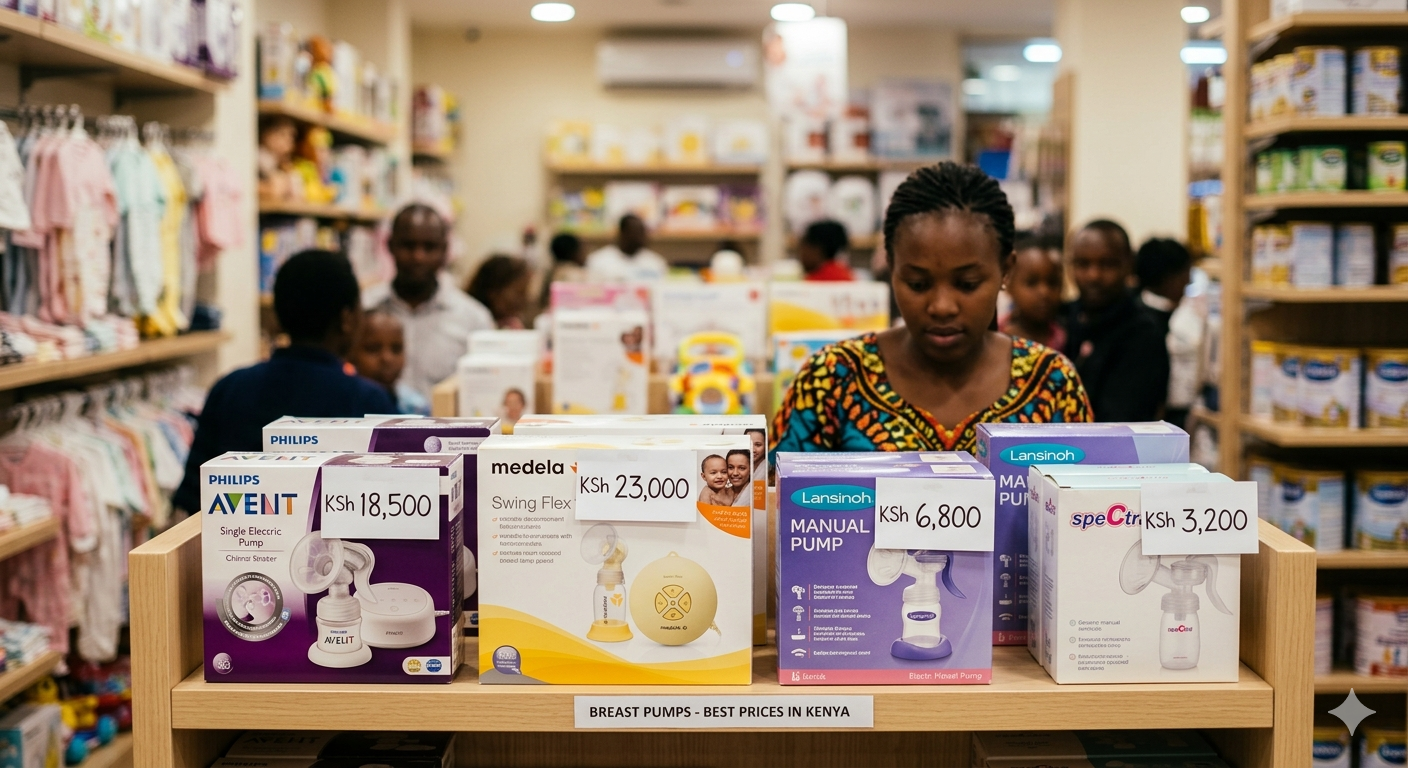
NAIROBI — Breast pump prices in Kenya range from KES 1,500 for basic manual models to over KES 35,000 for advanced double electric pumps, according to market data from baby product retailers and pharmacy chains across the country.
The breast pump market in Kenya has expanded significantly over the past decade, with products now available through hospital pharmacies, dedicated baby stores, online marketplaces, and social commerce platforms. This increased availability has resulted in a wide price range, with costs influenced by factors including pump type, features, brand, retailer, and included accessories.
Manual breast pumps are the most affordable option, with prices typically between KES 1,500 and KES 4,500. These hand-operated devices have fewer mechanical parts and do not require a power source. They are designed for occasional use.
Electric breast pumps are more expensive. Single electric pumps, which extract milk from one breast at a time, range from KES 4,500 to KES 12,000. Double electric pumps, which allow simultaneous pumping from both breasts, start at approximately KES 8,000 for basic models and can exceed KES 35,000 for advanced systems. The most common price range for reliable double electric pumps is between KES 15,000 and KES 25,000.
Several features increase the cost of electric pumps. These include adjustable suction settings, battery and DC power options, closed-system design with protective membranes that prevent milk from entering the motor, digital displays, and quiet motor operation.
Brand reputation also affects pricing. Established manufacturers that conduct research, development, and clinical testing typically charge higher prices than newer or less established brands.
Retailer type influences final prices. Large pharmacy chains and premium baby boutiques have higher overhead costs, which are reflected in their pricing. Authorized dealers generally charge more but provide genuine products with manufacturer warranties. Online platforms often offer lower prices due to reduced overheads, but buyers risk purchasing counterfeit products. Social media commerce channels carry the highest risk regarding product authenticity and transaction security.
The completeness of the kit also affects the price. Some pumps are sold as basic units requiring separate purchase of bottles, valves, membranes, and flanges. Others are sold as complete sets including multiple bottles, cooling bags, and spare parts.
Additional costs beyond the initial purchase include replacement parts such as duckbill valves, backflow protectors, and silicone membranes, which typically need replacement every one to three months at a cost of KES 500 to KES 2,000. Storage bottles, insulated cooler bags, cleaning brushes, and sterilizers represent further expenses. Electric pumps also incur minimal ongoing electricity or battery costs.
Retail sources advise mothers to assess their pumping frequency and lifestyle needs before purchasing. A mother returning to formal employment may require a different pump than one who is primarily at home.
Authorized distributors and brand websites offer guaranteed authentic products with valid warranties but typically charge manufacturer’s suggested retail prices. Major baby store chains and pharmacies allow customers to see products before purchase and often run promotions. Online marketplaces offer wide selection and competitive prices, but buyers are advised to check seller ratings, read reviews, and confirm warranty details. Social media commerce is considered the riskiest channel.
Market observers note that closed-system pumps, while more expensive upfront, may offer better hygiene and durability over time. Buyers are advised to verify international safety certifications before purchasing.